Inspired by this year’s Transmediale and the amazing artwork we’ve been exposed to during our time in Berlin, we have decided to explore a process of reflection on digital content consumption, the automated behaviors that can be developed when using social media and how anyone with an internet connection has the power to create information while it can get lost in an ocean of data.
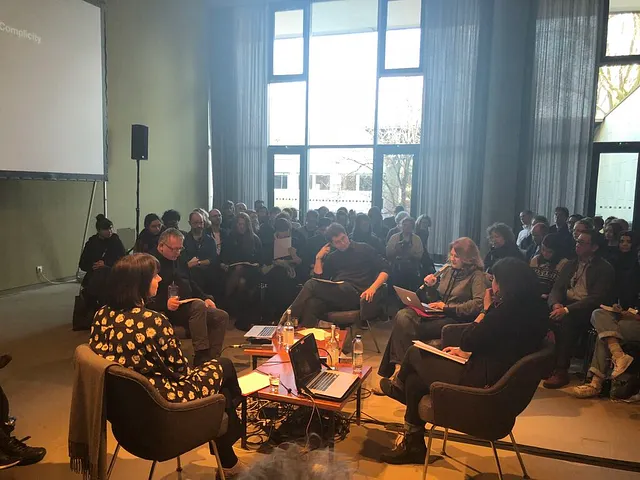
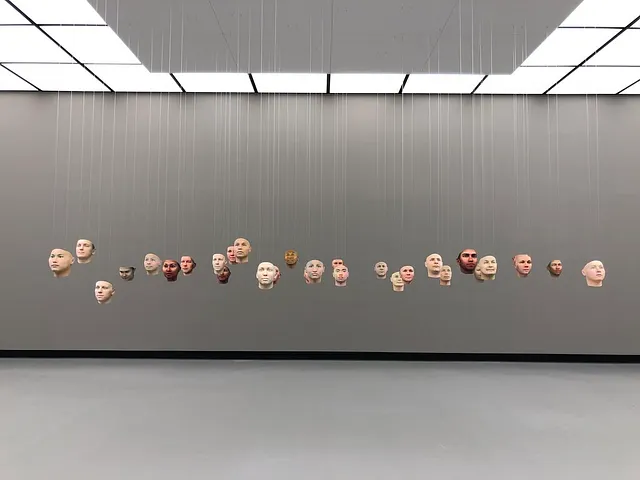
Today, around 3.5bn people are online regularly according to ITU and around 2.4bn use a social network worldwide. This means many of us are creating and consuming content at a rapid rate which can lead to a competition for each other’s attention. This can not only overwhelm us with information but ultimately turn our content into a grain in the sand. This article does not go into details on the current digital media content creation and consumption practices or the maintaining of the digital self, but rather focus on the exploration of sharing content where no one is looking for it by experimenting with using known mediums on an unusual context.
Offline
Thinking about how data is served and where we tend to consume it, steered us to make use of a peer-to-peer (P2P) offline network to store information as a means to understand how its quantity overflow can make us invisible while in plain sight. We have decided to make a contribution to the Dead Drops project as a starting point.
A dead drop is a USB stick placed in public space, part of an anonymous, offline, peer to peer file-sharing network. Anyone can access, add and remove the contents on storage. The project was created by conceptual artist, Aram Bartholl and has now many iterations worldwide.
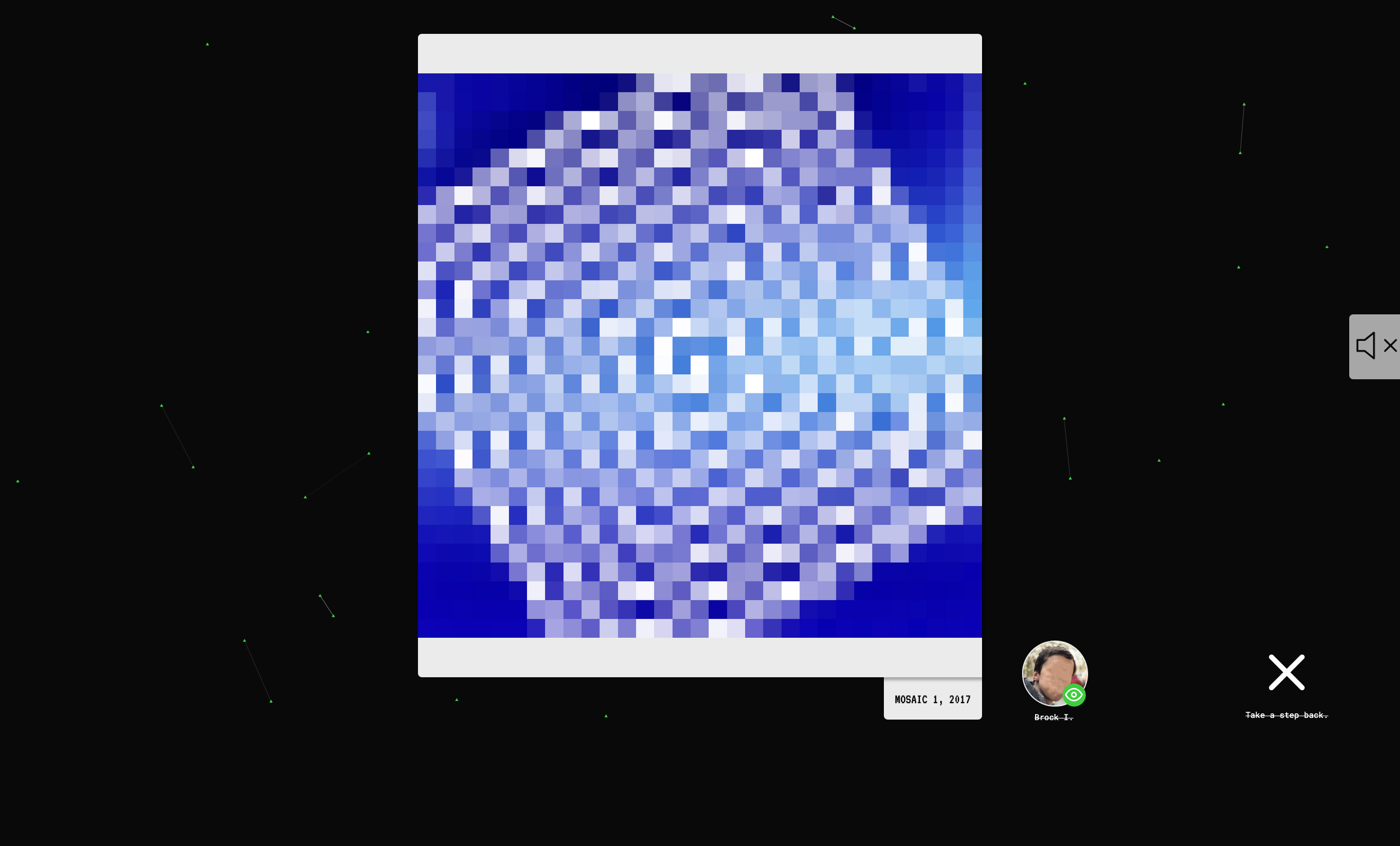
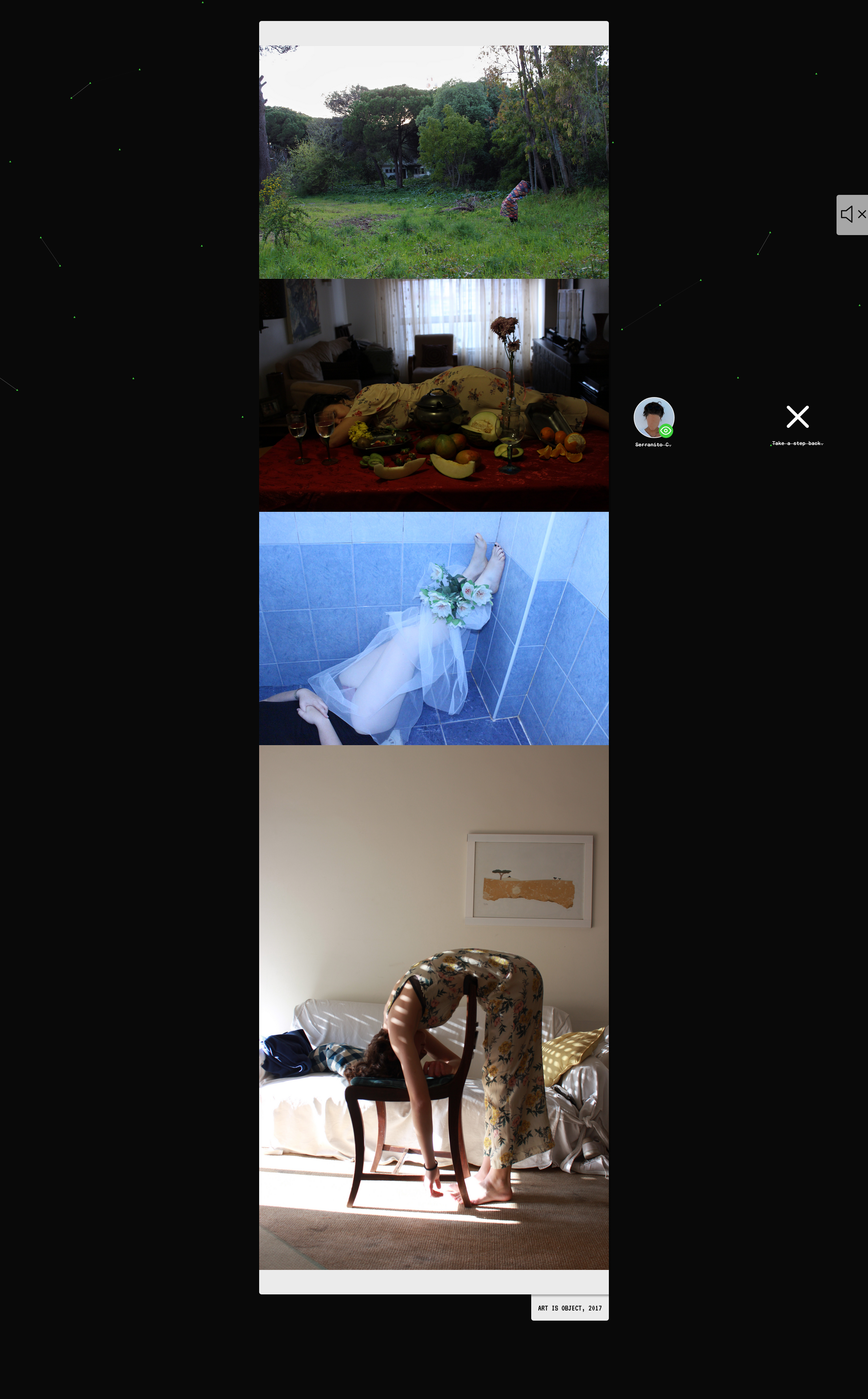
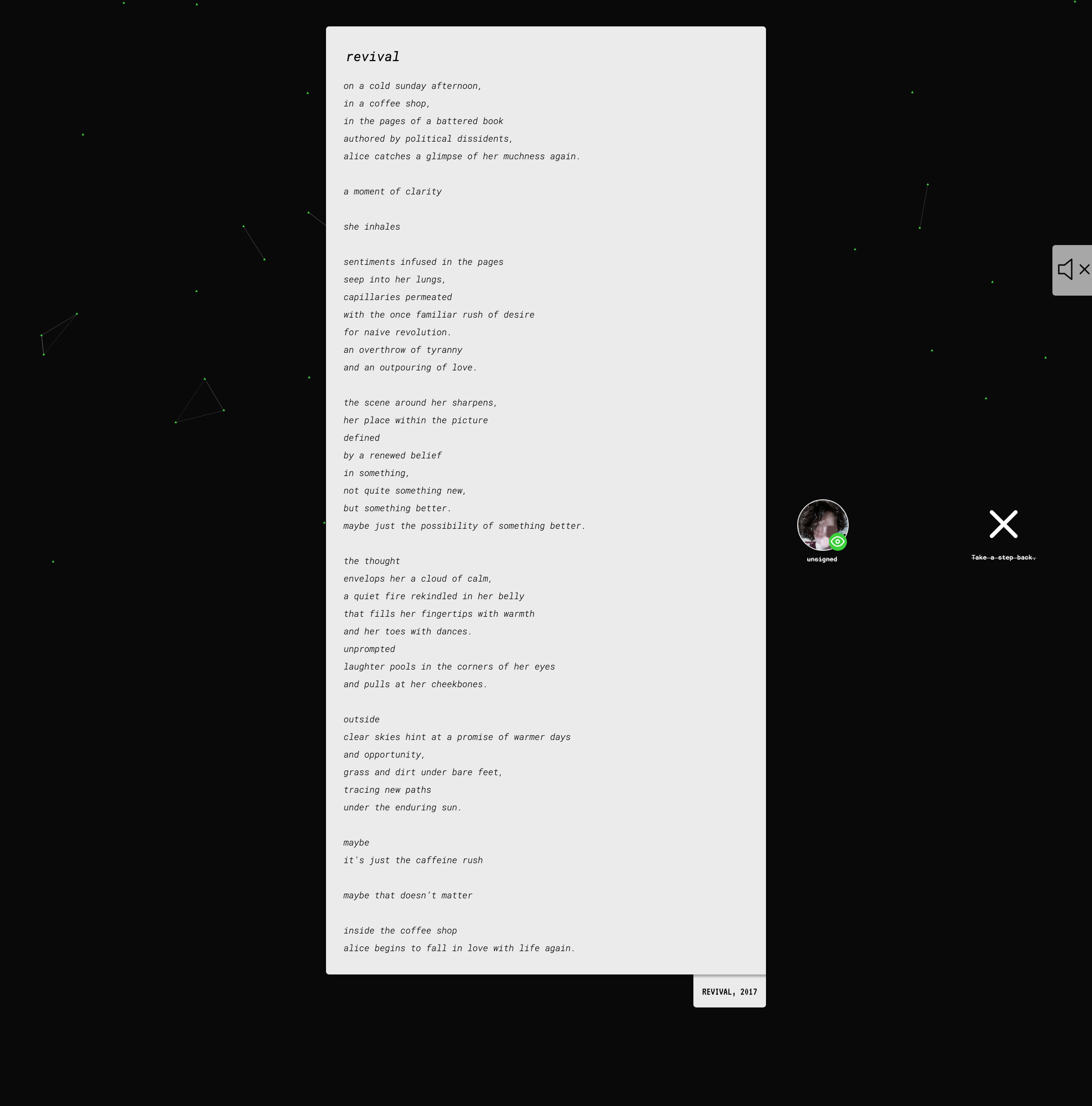
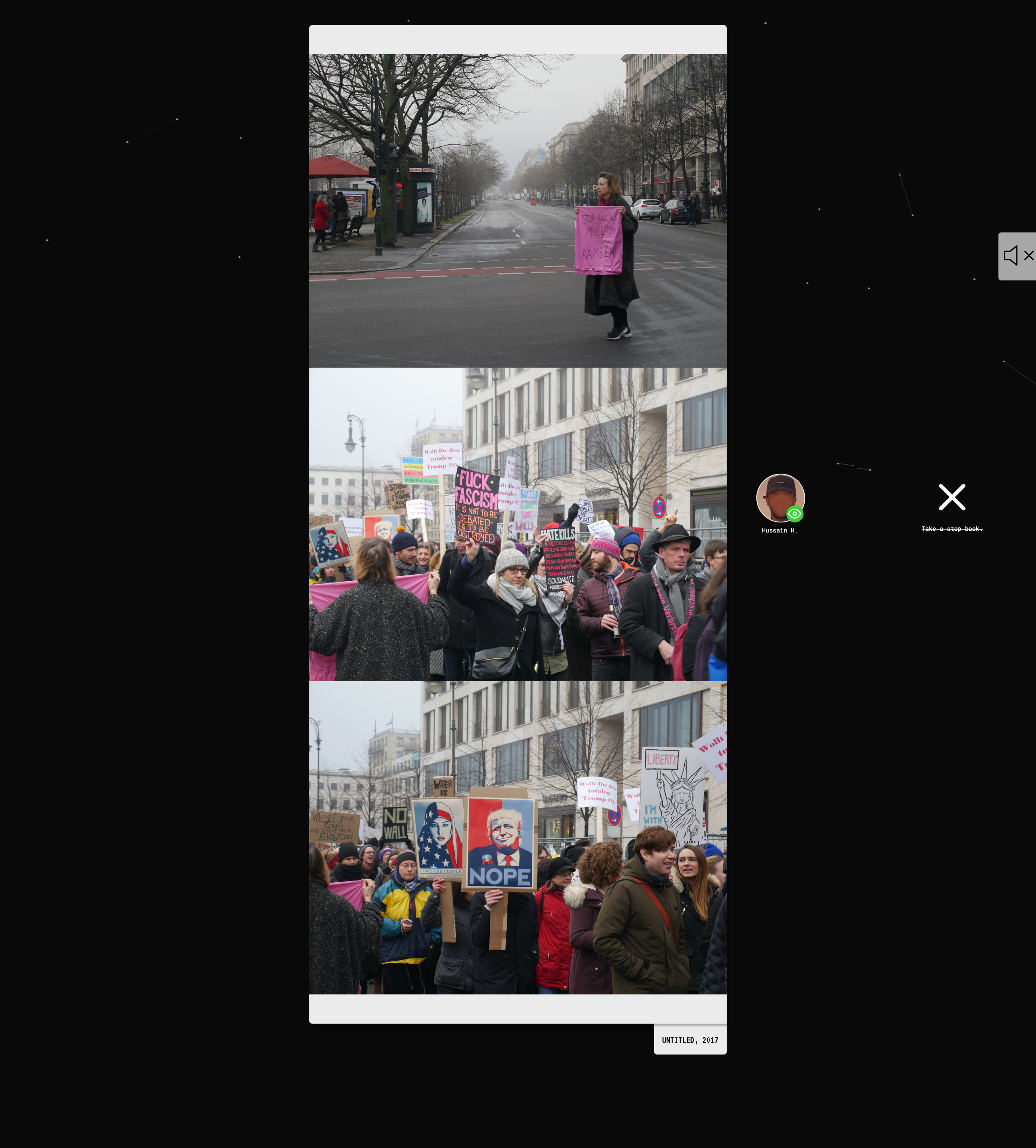
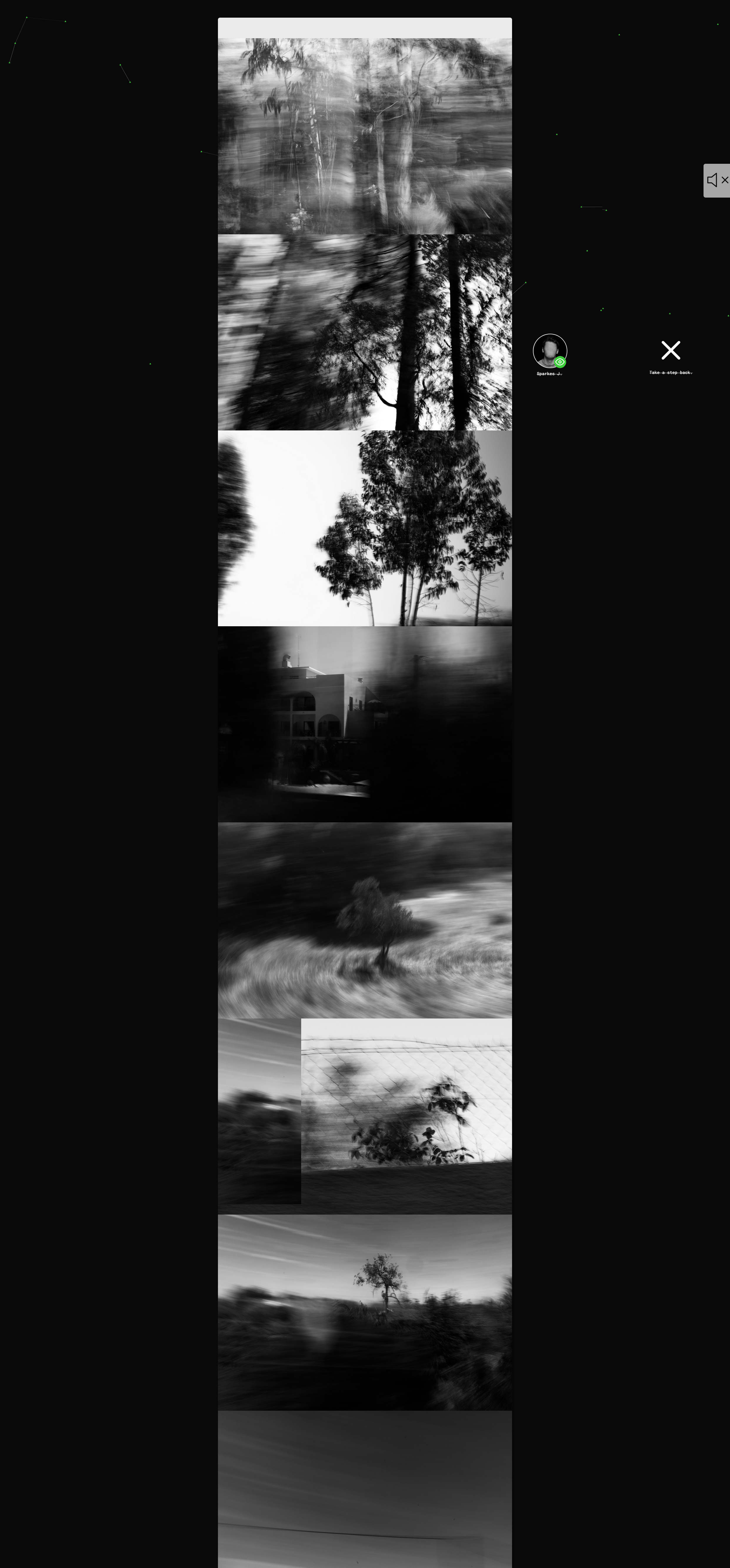
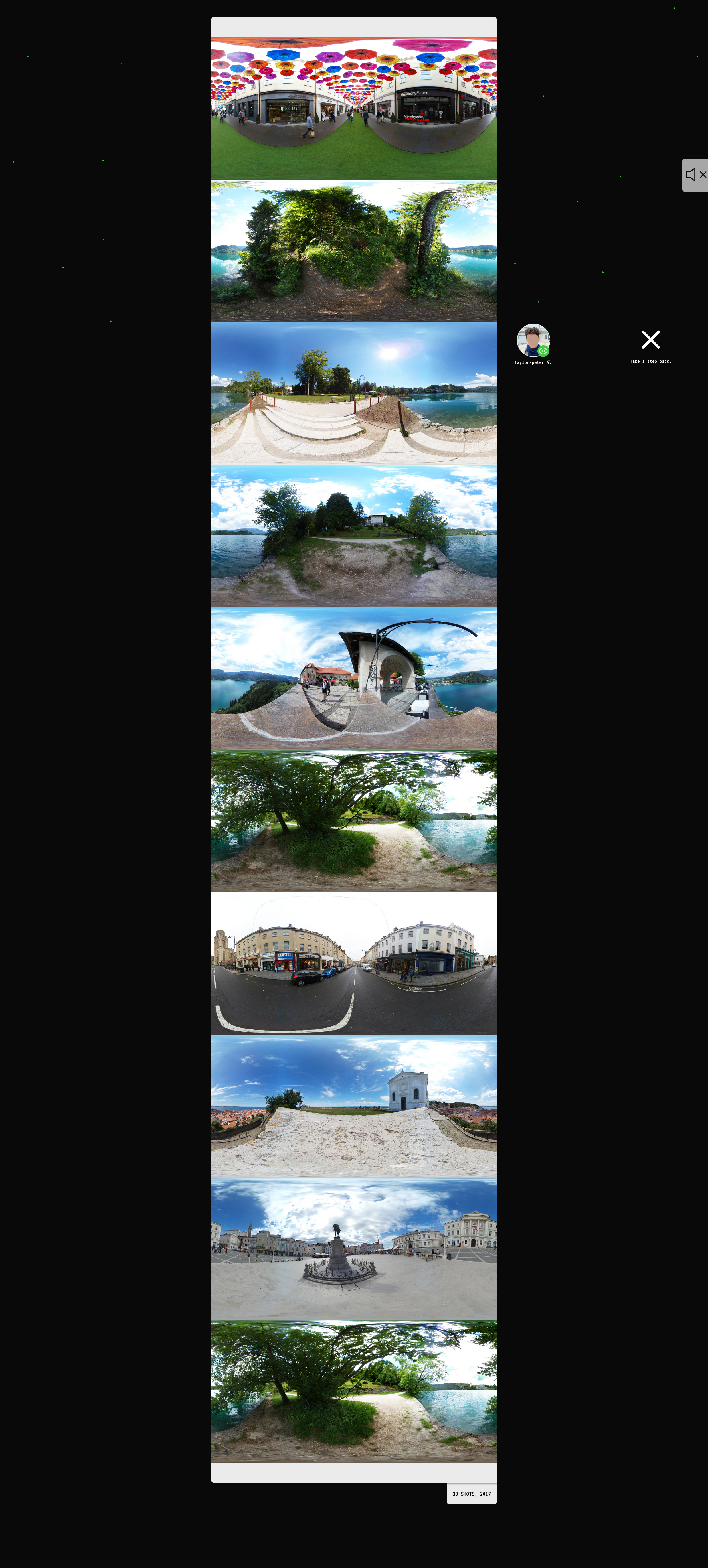
This task was turned into a ~10d side project that involved things like getting materials together, finding appropriate locations, documenting our progress and produce more work based on our findings. The initial plan was to use dead drops as a way to share art through the city. I have reached out to the artists and creators I know and invited them to send over work that they would be happy to store on these drops and have put together the contents that would be copied onto each USB. We have then deployed these drops on the planned locations.
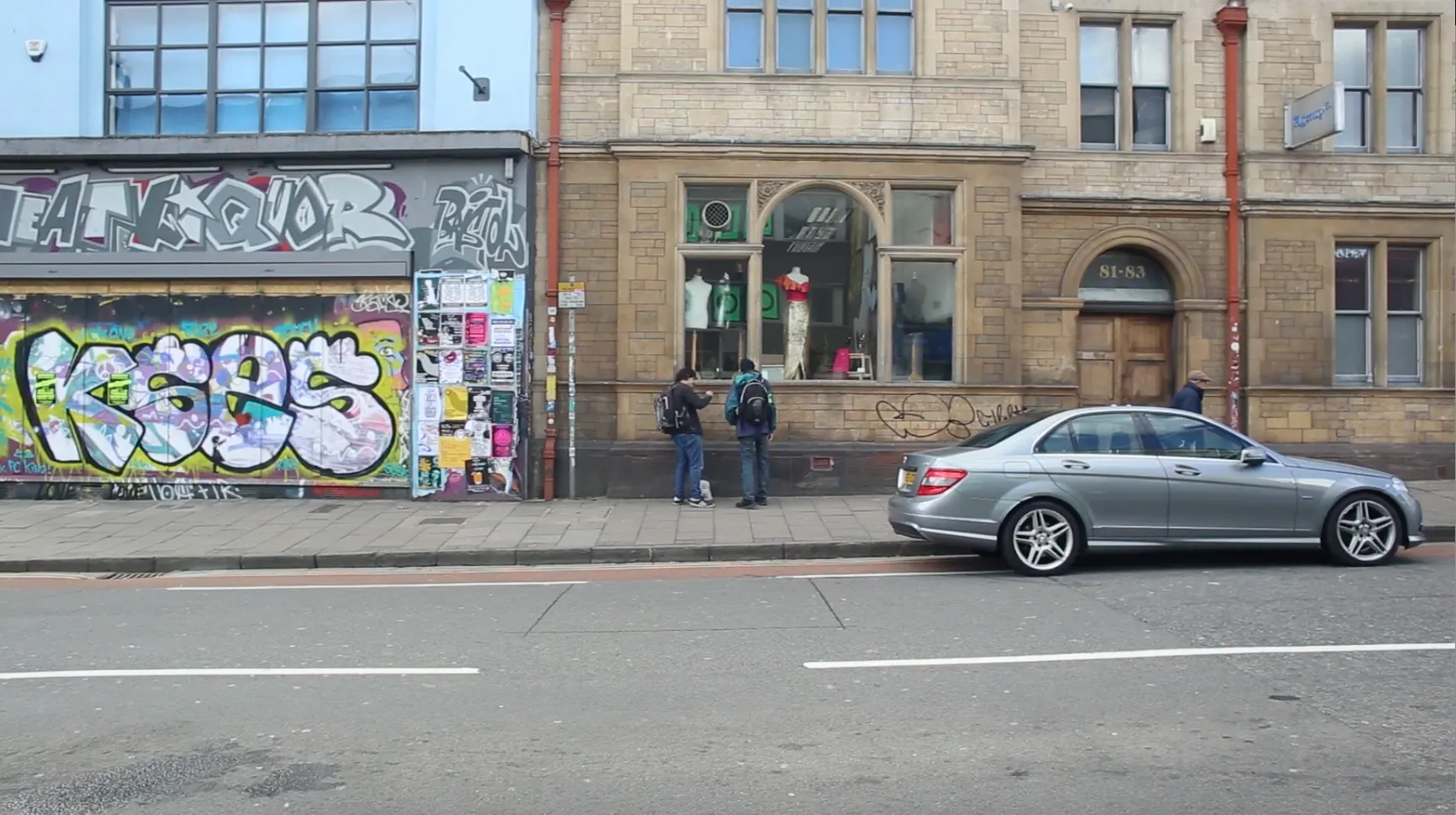
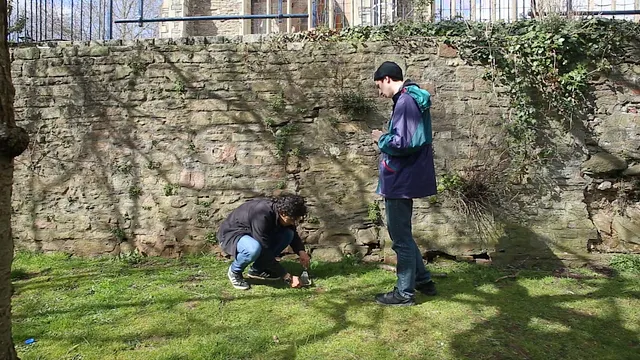
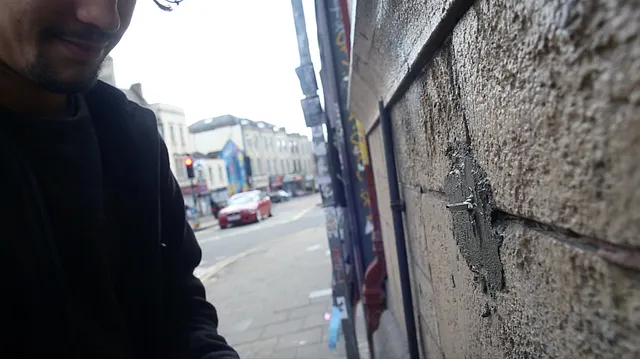
Using the USB as a medium to access content was an interesting experiment but it had its challenges in order to determine outcomes. For instance there was no way to monitor how the devices were being used and how many people have interacted with them which made it difficult to know how this compares to other means of sharing content.
In order to get insights on this we have spend some of our time observing the sites from a distance. This is far from effective but at least it gave us an idea on how people react to the drops. The most notable finding is that the drops tend to go unnoticed, even the ones that were placed around eye level height as a lot of people were using a smartphone as they walked past them.
No doubt that we are more than ever turned to our screens, around 4hrs a day which can arguably reduce the awareness of space around us, not only because we spend a lot of time interacting with our devices but because we tend to turn to them to share and look for information, so why look somewhere else? The device holds a world of information where details can be filtered and controlled as we see fit.
Deploying dead drops through the city plays with this idea as a USB stick coming out of a building is content hiding in plain sight and requires people to be observant in order to notice them while have little control of what is going to be presented to them. We’ve chosen to observe the interactions in favor of adding monitoring software to the USBs to respect the guidelines of the project and allow their use just like any other of its many iterations. Placing these devices in public space exposes them to everyone and people have freedom in how they interact with them.
This also meant that the artwork could only be accessed on location when the object is either found by accident or intentionally by looking it up on the database and locating it, an experience that differs from other media platforms. It relies on our sense of curiosity and finding out things to lead us into exploring the artwork present on the drop. This takes a lot more effort as most people do not carry a laptop everywhere (required to access a dead drop), resulting in a reduction of the user scope to the ones who are making a conscious decision to access the contents of the drop.
It draws a contrast between how most social networks function by design and the dead drops. It’s amazing how teams at Facebook, Google, Twitter and others have to take on the challenge of creating great design solutions to make a large amount information available to their users and tailor it to them. However, on most social media platforms content is exposed to us more often than not on an infinite feed, meaning we might be engaging with content because it is easily within our reach and we might have developed a habit of doing so, not because we’ve made the conscious decision that’s the right content we want to consume at that time. I am not arguing content should be deliberately challenging to get to but it is interesting that by increasing the effort required to access it people tend to only do so if they have decided to take the time to.
Getting lost on an infinite scroll can lead to automated behavior and quick consumption of information but how useful accessing information actually is? Is designing a system where people need to make a conscious decision to engage with a piece of content a relevant or attainable goal?
I personally tend to ask my friends what was the most interesting thing they have seen on Facebook the last time they have visited it (usually not long ago) and they tend to not remember any of it. Now, this is far from reliable research but it makes me wonder how much of what we see actually stays with us?
Online
The project involved collaboration with artists and creators to get the contents of the drops together and a small team to deploy them. Having the input of multiple people with knowledge in different areas allowed the project to grow past contributing to the dead drops network. Discussions on work ownership and other topics such the anonymity nature of the project led to the exploration of other avenues that allowed the same work to be accessed a different way and increase its scope by using an online entry point, a web drop.
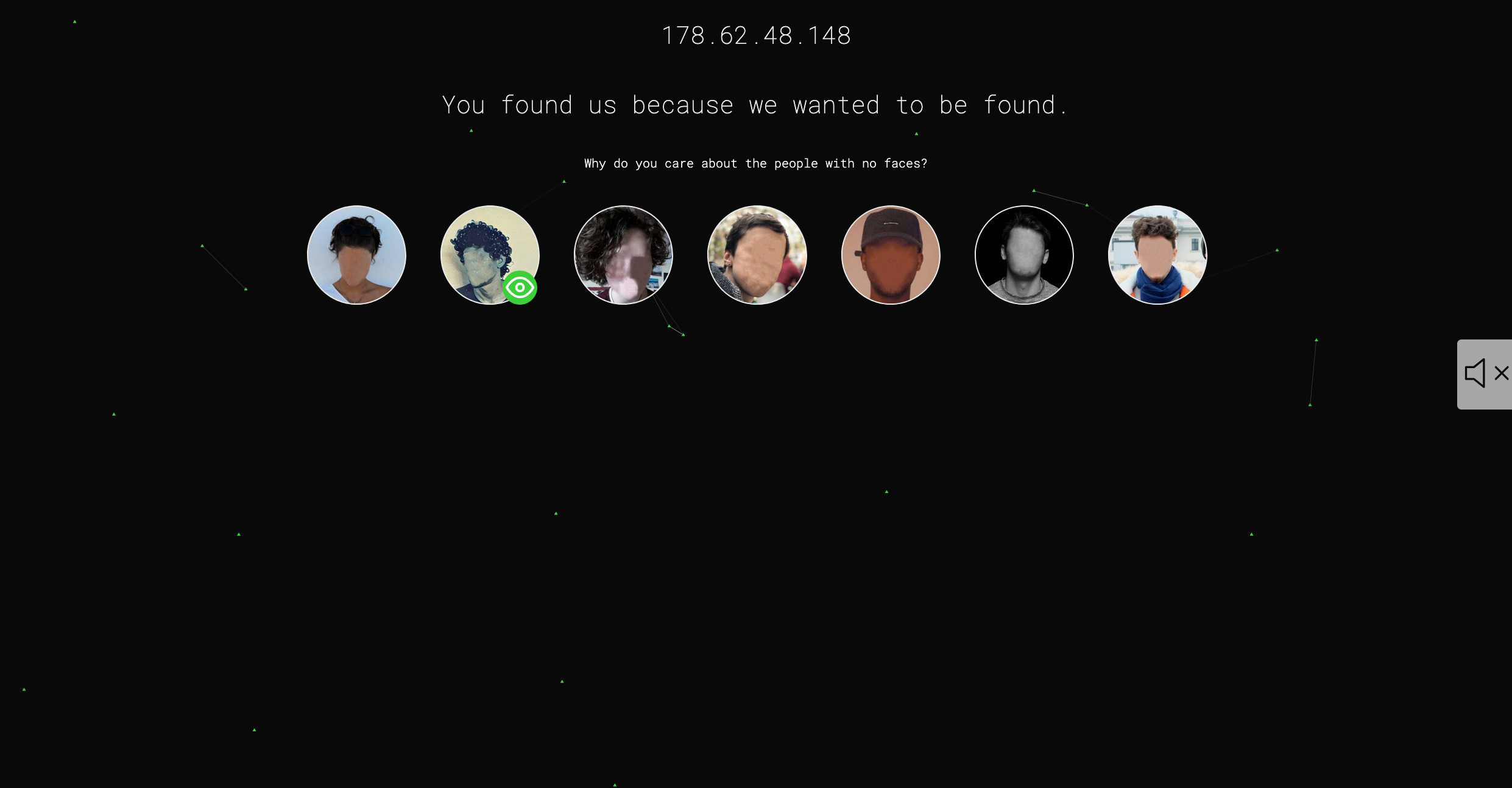
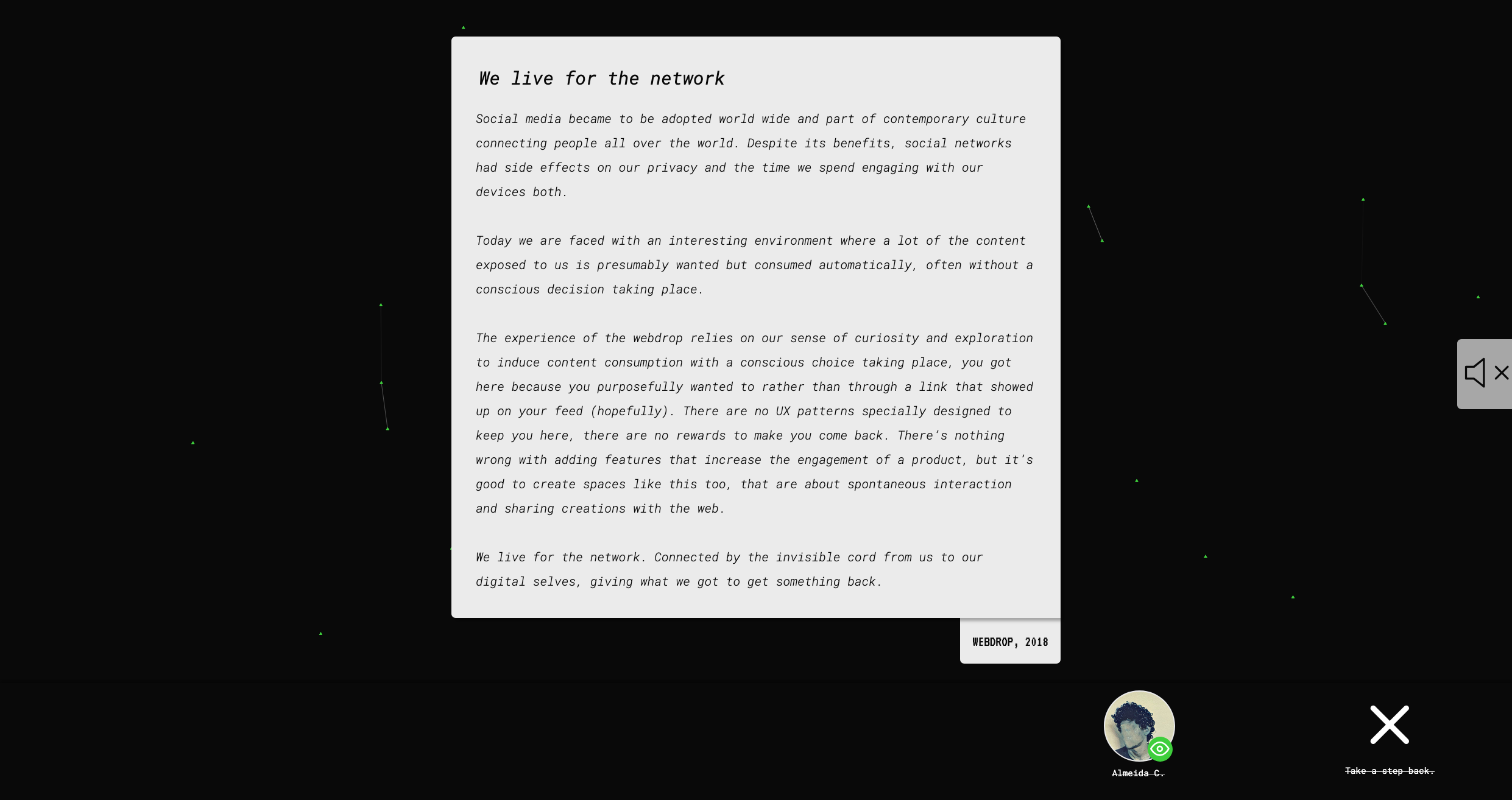
The web drop is essentially a secret website. Instead of a domain, the space can be accessed through a raw IP address found on dead drops we’ve deployed. This presents users with a group of artists to select from and open the opportunity to get to know their work and learn more about the project.
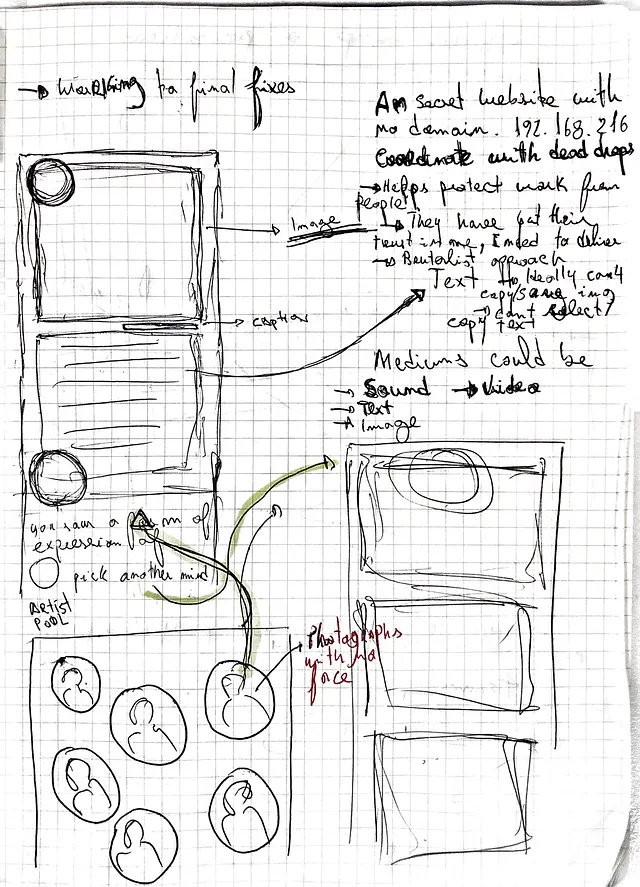
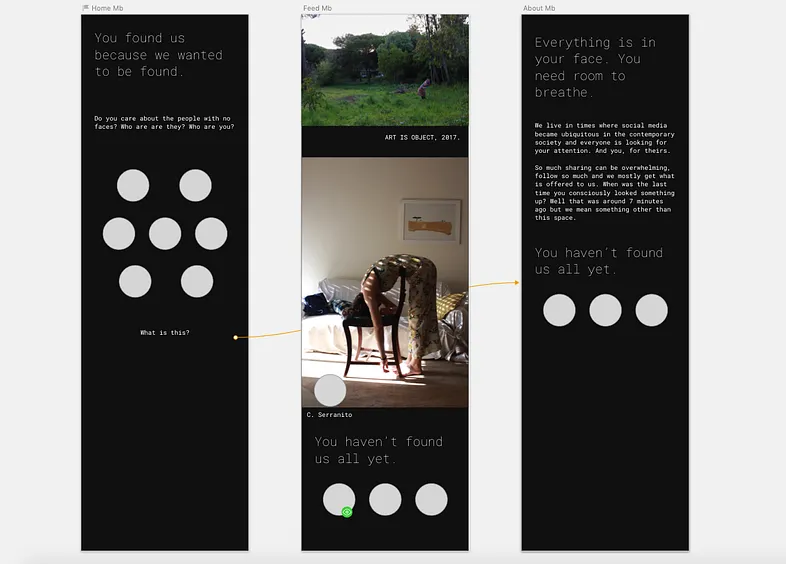
The creation of the web drop stems from the same idea of accessing information in a slightly different way as an attempt to leave automated interaction behavior out of the experience. It also tries to address some of the shortcomings we have found while exploring sharing content with the USBs.
The 178.62.48.148 is now public, and can now be used to experience the design on the application in the online context it was designed for.
While the idea of sharing content offline is attractive (at least to us), updating all its iterations is time consuming. There are interesting aspects such as how leaving a message for someone requires the receiver to know its existence and where it’s located. However, the inherent secrecy of the project is not always useful on reflective and experiment based projects. The web drop gives us a better idea of who found our dead drops by making use of analytics, as initially the IP address could only be known by either someone who looked into one or shared the address with someone. This was later extended by hiding the address in other content. No doubt this would also mean that there are cases where it fails to know when an artifact was interacted with. For instance, someone could access a dead drop and not access the web drop, meaning we would never know that person used it. Additionally, it does not track which drop was accessed but we are willing to work more on that in future.
The 178.62.48.148 is now public, and can now be used to experience the design on the application in the online context it was designed for. This happened after all physical devices were removed or vandalized, which marked the end of the project.
The work posted on the web drop won’t get likes or comments, it’s also not possible to subscribe to it. This requires checking the web drop from time to time if there’s interested in keeping up to date with it — we thought that making it less easy to access was another way to keep it from being used automatically and ensuring that who does has a higher chance of actually seeing it rather than proceeding to the usual automated consumption.
Extending the contents of these dead drops to a web drop brings a few advantages too. A single source of truth is updated when new content is added. Additionally, it extends what the user can experience from the first stage where they find a USB to a second stage where they might have the interest in accessing the it’s contents and the web drop. A transition from offline to online, allowing visitors to keep track of the content changes if they wish to without the need to constantly make their way back to the physical drop.
Comparitively, having content in a brick wall seemed no different than having it on a social media feed. It is there for everyone to see, however it can become invisible in plain sight. This doesn’t mean that no one will find it useful and it could be argued that having so much content variety available is a good thing as there’s the chance to learn different perspectives and access different sources of information. We believe there are many other variables to take into account when developing more meaningful findings such as how the quality of the content, the awareness that the content exists, how we curate and filter information.
I would like to thank all the artists that took part and gave some of their precious time to make this happen, Iwan Brock and Marco Cedrola who added to the project by helping to plan, document and deploy the drops. It is a privilege to me to have the opportunity to collaborate with all of them.
References
Bartholl A., Dead Drops (2010). Available from: https://deaddrops.com/ [Accessed March, 2018]
Bartholl A., Aram Bartholl (2018). Available from: https://arambartholl.com/info/ [Accessed March, 2018]
Harrys, T.,How Technology is Hijacking Your Mind — from a Magician and Google Design Ethicist (2016). Available from: https://medium.com/thrive-global/how-technology-hijacks-peoples-minds-from-a-magician-and-google-s-design-ethicist-56d62ef5edf3 [Accessed April, 2018]
ICT, ICT Facts and Figures 2017 (2017). Available from: https://www.itu.int/en/ITU-D/Statistics/Documents/facts/ICTFactsFigures2017.pdf [Accessed April, 2018]
ICT, Total Internet Users Statistics (2016). Available from: https://www.itu.int/en/ITU-D/Statistics/Pages/stat/default.aspx [Accessed April, 2018]
Statista, Social media — statistics & facts (2018). Available from: https://www.statista.com/topics/1164/social-networks/ [Accessed April, 2018]
eMarketer, Be prepared mobile (2018). Available from: https://www.emarketer.com/corporate/coverage/be-prepared-mobile [Accessed April, 2018]
Tiku, N., James Damore sues Google for discriminating against white men (2018). Available from: http://www.wired.co.uk/article/google-james-damore-lawsuit-sexism-embarrass [Accessed April, 2018]
Transmediale, Face Value (2018). Available from: https://2018.transmediale.de/ [Accessed April, 2018]
Nevins J., A becoming resemblance (2017). Available from: https://www.theguardian.com/culture/2017/aug/03/chelsea-manning-hair-clippings-artist-portraits-dna [Accessed April, 2018]
WHITEvoid, SKALAR — the exhibition cycle — REFLECTIONS ON LIGHT AND SOUND BY CHRISTOPHER BAUDER AND KANGDING RAY (2018). Available from: https://vimeo.com/257141462 [Accessed April, 2018]